A law firm’s Google ranking usually drops overnight for one of four reasons: a core algorithm update, a technical error like an accidental noindex tag, a manual penalty, or a competitor firm publishing stronger content. Checking Google Search Console’s Manual Actions report and cross-referencing the drop date against Google’s confirmed update calendar tells you which one you’re dealing with within a day, and that determines the entire recovery approach.
If your firm’s website dropped out of the rankings suddenly, the instinct is to start changing things immediately. That’s usually the wrong move. A sudden drop almost always has a specific, identifiable cause, and fixing the wrong thing first just adds noise to a diagnosis you haven’t finished yet. This guide walks through how to figure out what actually happened to your law firm’s rankings and what a realistic recovery process looks like.
Legal websites carry extra weight in how Google evaluates quality, since legal content falls under what Google treats as Your Money or Your Life (YMYL) content, pages that can affect someone’s legal or financial situation. That means core updates, which re-evaluate how well pages serve searchers, tend to hit law firm sites harder than average when the underlying content or expertise signals are thin. According to Google’s own documentation on core updates, these changes are broad and don’t target individual sites, they reassess content quality across the web as a whole, which is exactly why a firm that “did nothing wrong” can still see rankings fall if competitors’ content simply got stronger.
Ready to figure out what happened to your firm’s rankings? Contact RankFX Global for a free diagnostic session.
Why Did My Law Firm’s Website Lose Rankings on Google Overnight?
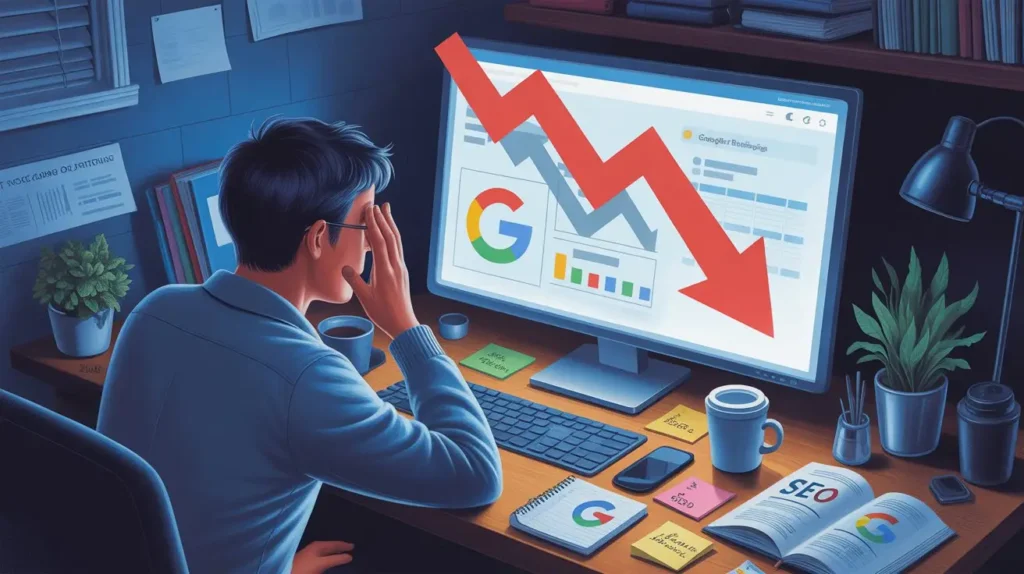
A fast ranking drop almost always traces back to one of four causes: a core algorithm update, a manual penalty, a technical error, or a competing firm improving its content faster than yours. Google doesn’t remove sites at random, and for law firms specifically, the most common trigger among these four is a core update hitting thin or generic practice area pages.
Technical errors are the fastest to happen and the easiest to miss. A noindex tag added accidentally during a site migration, a broken canonical tag, or a redirect chain introduced by a developer can knock a homepage or key practice area page out of the index within hours, and it can sit undetected for days if nobody’s watching Search Console closely.
Your first move is straightforward: log into Google Search Console, find the exact date the drop started, and compare it against Google’s confirmed update rollout dates. If the dates line up, you’re likely looking at an algorithmic reassessment rather than a technical issue or a penalty, and that distinction changes everything about how you respond.
Is It a Manual Penalty or an Algorithmic Drop?
The fastest way to tell the difference is the Security and Manual Actions section of Search Console, if there’s a message there, you have a manual penalty; if there’s nothing, you’re dealing with an algorithmic reassessment. These require different responses, and confusing the two wastes time.
A manual penalty means a human reviewer at Google flagged something specific, commonly unnatural link patterns, thin or duplicated content across practice area pages, or cloaking. These are serious, but they’re fixable: correct the underlying issue, file a reconsideration request, and Google typically reviews it within a few weeks.
An algorithmic drop carries no such message. Your firm’s site wasn’t penalized; it was re-evaluated and ranked lower relative to competing firms whose pages better matched current quality signals. Recovery here means improving your content, authority, and technical health until your pages outperform the ones that displaced you, there’s no reconsideration request to file, because there was no violation.
As an illustration of what a drop can cost: a firm generating roughly $8,000 a month in value from organic traffic that loses 40% of its rankings after a core update is looking at something like $3,200 a month in lost value while the issue goes unaddressed. That’s an estimate to illustrate scale, not a guaranteed figure for any specific firm actual impact depends on your practice areas and conversion rates.
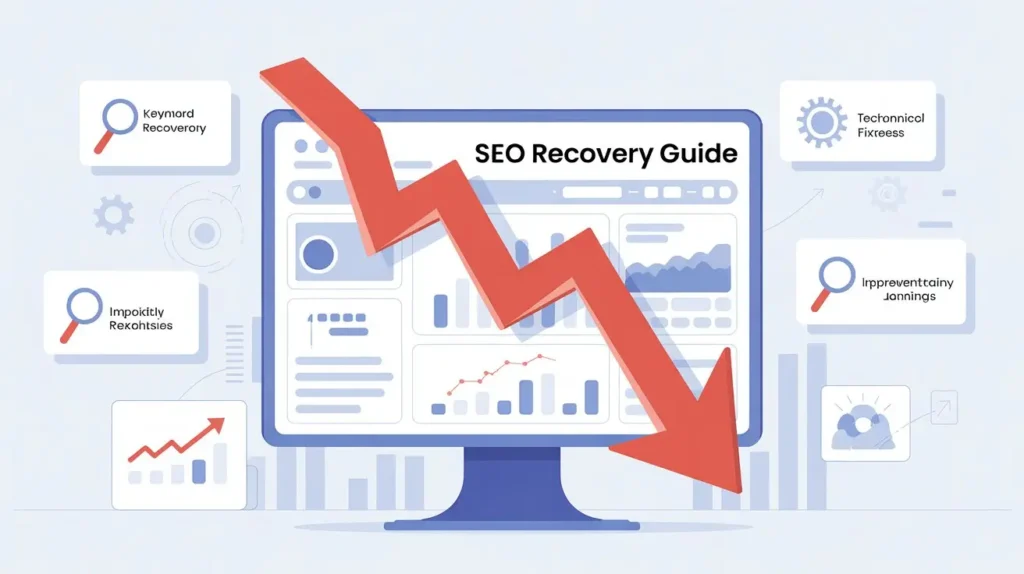
Recovery Comparison Table
| Situation | Recovery Time | Typical Cost (USD) | Key Factor |
| Manual penalty | 4–8 weeks | $1000–$2500 | Reconsideration request quality, especially for thin or duplicated practice area pages |
| Core update — content | 4–6 months | $1,800–$4500/mo | Practice area page depth and E-E-A-T signals (attorney credentials, case experience) |
| Technical error | 1–3 weeks | $600–$1,800 | Speed of diagnosis and fix (noindex tags, broken redirects) |
| Backlink / link spam | 2–4 months | $1,200–$3,500 | Disavow file completeness and quality of replacement legal-relevant links |
| Competitor improvement | 3–5 months | $1,500–$4000/mo | Content gap analysis against competing firms’ practice area pages |
How to Recover From a Google Algorithm Update Affecting Your Firm’s Site
Recovery starts with confirming which type of update hit your site, since core updates, helpful content shifts, and link spam updates each call for a different fix. Once you know which one it was, the work follows in a specific order.
Confirm the update type. Core updates affect broad quality signals across the site. Helpful content shifts specifically target thin, search-engine-first content. Link spam updates target manipulative backlink patterns. Knowing which one hit tells you where to spend your time first.
Audit content quality on affected pages. For a law firm, this usually means practice area pages. Ask honestly whether each page demonstrates real expertise, specific case types handled, clear explanations of process, and language that reads like it was written by someone who practices the area, not a generic template swapped across every city page. Thin practice area pages are one of the most common reasons legal sites underperform after a core update.
Check the backlink profile. Toxic or irrelevant links can drag an otherwise strong domain down. Review referring domains in Search Console or a backlink tool and disavow anything from clearly unrelated or low-quality sources.
Fix technical issues before rewriting content. Crawl errors, slow mobile load times, and broken internal links suppress rankings regardless of how good your content is. Run a full technical check first, our Legal SEO, GEO & AEO service includes a technical audit built specifically for law firm sites.
Set a realistic timeline. This is the part most agencies skip: even after everything is fixed correctly, meaningful recovery often doesn’t show until the next core update cycle completes, and Google typically spaces core updates a few months apart. Expecting an immediate bounce-back after a fix is the most common misjudgment in this process.
Talk to a RankFX legal SEO specialist if your recovery has stalled and you need a clear read on what type of update hit your site.
What Do Law Firms That Recover Well Have in Common?
Firms that hold up better through core updates tend to share three traits: content written with genuine subject-matter depth rather than recycled summaries, backlinks from relevant and reputable legal sources, and a technically clean site. None of these are quick fixes, but they’re the pattern that shows up consistently.
On the content side, that means practice area pages that go beyond a paragraph or two pages that reflect actual knowledge of how a case type typically proceeds, written in a way that would hold up to scrutiny from someone who actually works in that practice area. Vague, interchangeable service descriptions tend to be the first thing that underperforms after a core update.
On the authority side, links from bar association pages, legal directories, and other law firm or legal publication sites tend to carry more weight than generic directory links, since they signal relevance to a legal audience specifically. Any content or link-building work should also stay inside professional conduct boundaries ABA Model Rule 7.1 governs how lawyers can describe their services and results, and state bar rules can vary, so it’s worth having whoever handles your content and outreach be aware of those boundaries.
A practical recovery approach: identify which pages dropped, look at what the top three ranking competitors for the same keyword cover that your page doesn’t, and expand your page to close that gap with real depth rather than rebuilding it from scratch. Adding well-researched, genuinely useful content to an underperforming page is often a faster path back than starting over.
What RankFX Global Checks First When a Law Firm’s Rankings Drop
When a firm comes to us after a sudden drop, the review follows a set order so we’re not guessing.
First, we match the drop date against Google’s confirmed core update calendar to establish whether this looks algorithmic. Second, we check Search Console at the page level a drop concentrated in practice area pages tells a different story than a homepage-wide drop. Third, we run a technical crawl looking for indexing blocks, redirect issues, duplicate content, and page speed problems; our GBP & Map Pack service also covers whether your Google Business Profile itself has slipped, which can compound an organic drop for firms relying on local search. Fourth, we compare the backlink profile before and after the drop date to see whether new toxic links appeared or a previously strong link source lost value.
This review typically takes a couple of days for a thorough read, and it produces a specific report: what dropped, the likely cause, and a priority order for addressing it not a generic list of SEO best practices.
Book a free consultation with RankFX Global, no commitment, just a clear read on what happened to your firm’s rankings.
Getting Your Firm’s Rankings Back on Track
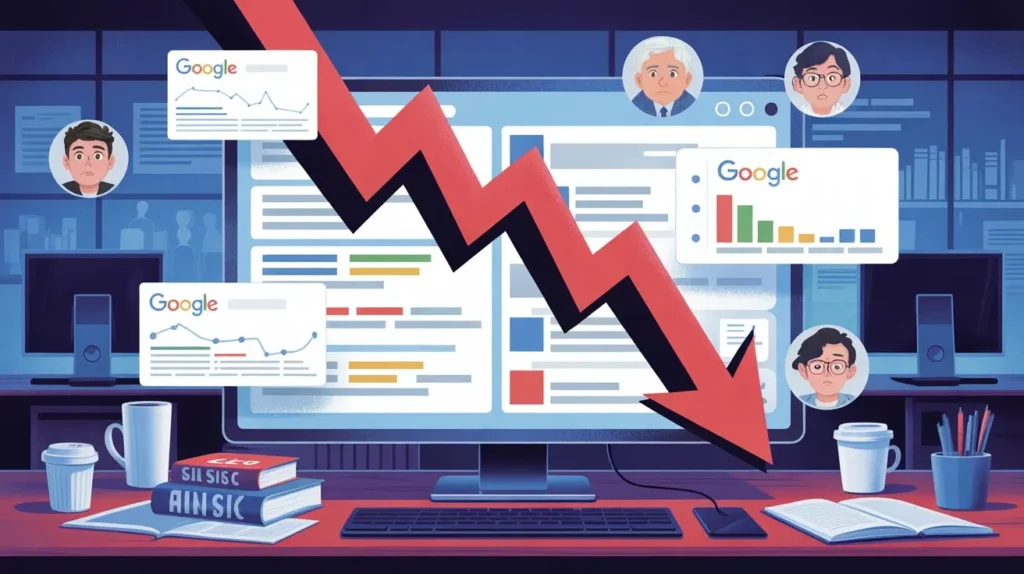
If your firm’s Google ranking dropped and you’re not sure why, the right first step is a structured audit, not a round of random changes. Every change made before the cause is confirmed adds noise to the diagnosis and makes it harder to know what actually worked once rankings do recover.
For most firms, recovering from a core-update-related drop takes a few months when the right fixes are made in the right order, technical issues first, then content depth, then authority signals. There’s no way to guarantee a faster timeline, and any agency that promises one is setting expectations it can’t control, since nobody outside Google controls exactly when or how the next update will re-rank a given page.
If you’re ready to find out what’s actually behind your firm’s ranking drop, get in touch with RankFX Global. We’ll review your site, walk you through what we find, and lay out a realistic plan for your practice areas and market.
FAQs
1. How long does it take a law firm to recover from a sudden Google ranking drop?
It depends on the cause. Technical errors can often be fixed within a couple of weeks. Recovery from a core update tied to content quality typically takes a few months of consistent work.
2. Will my firm’s rankings come back on their own after a core update?
Sometimes, but rarely without any action. Google tends to reward sites that actively improve content and technical health over sites that simply wait.
3. How do I know if my firm’s ranking drop is a manual penalty or an algorithm update?
Check the Security and Manual Actions section in Google Search Console. If there’s a message there, it’s a manual penalty. If not, cross-reference your drop date against Google’s core update history to see if it lines up.
4. What should I check first after a law firm’s site drops in rankings overnight?
Run a technical crawl first. Indexing errors and accidental noindex tags are quick to fix and one of the most commonly overlooked causes of a sudden, sharp drop.
5. Can a law firm recover from a core update without hiring an SEO agency?
Yes, it’s possible, but the process tends to be slower without experience diagnosing the specific cause misidentifying the problem and fixing the wrong thing first is a common way recovery gets delayed.
6. How does RankFX Global help law firms recover from a ranking drop?
We run a structured review update timing, page-level Search Console data, a technical crawl, and a backlink comparison to identify the likely cause and give your firm a prioritized fix plan. Contact RankFX Global to get started.

One Response